    Technical Guides|7 min read

    Liquid Waterproofing vs Felt: Which Is Better for Commercial Flat Roofs?

    Published 19 March 2026 by Dynamic Commercial Roofing Technical Team · Updated 20 April 2026

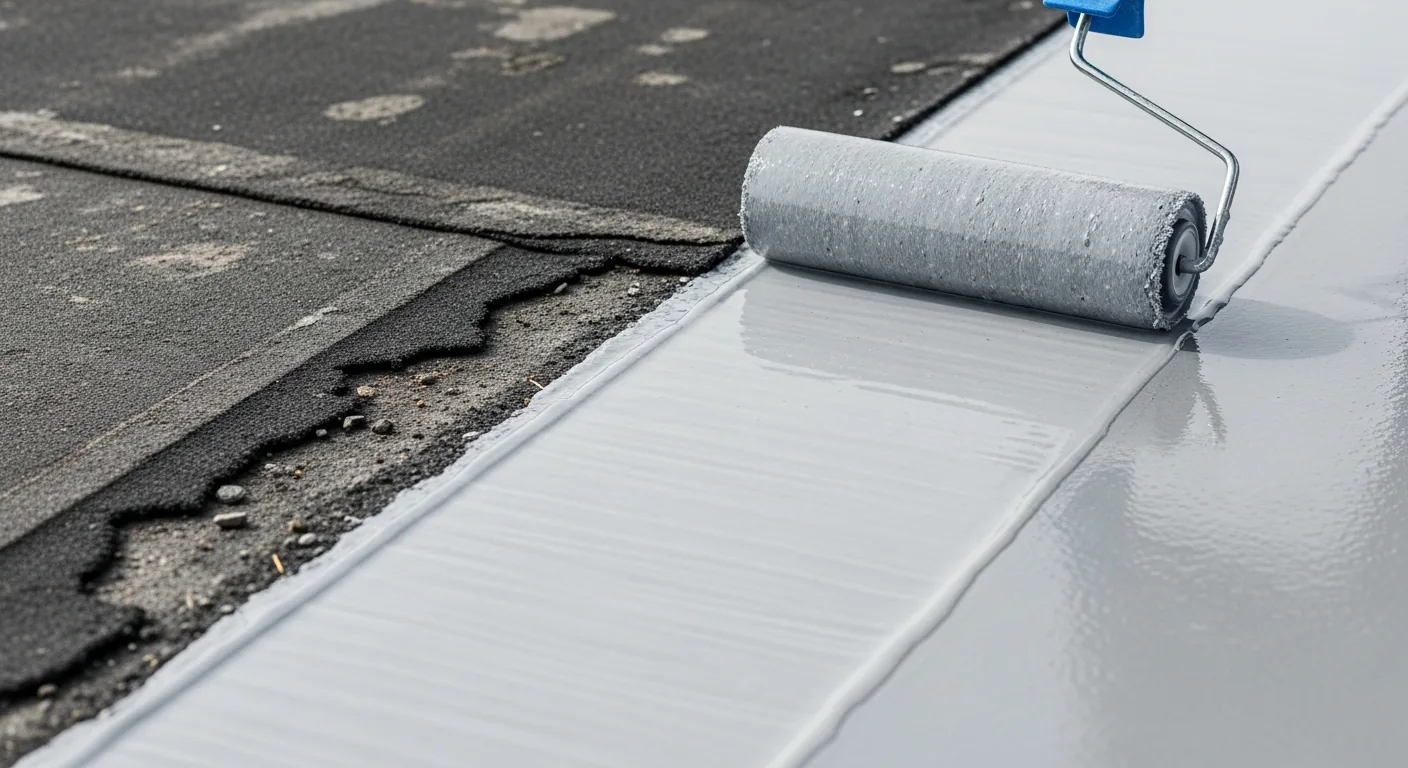
    Side-by-side comparison on a commercial flat roof: a roller applying clear liquid waterproofing membrane next to a section of torn-up old black bitumen felt.

    Choosing the right waterproofing system for a commercial flat roof is a 20-year decision. Get it right and the building owner forgets the roof exists, which is the goal. Get it wrong and the same building enters a cycle of leaks, patches, and budget meetings every winter. The two systems most commonly quoted in the UK market are traditional built-up felt and modern cold-applied liquid waterproofing. Both have a place, and contractors who specialise in only one will tend to recommend that one. This guide gives you the honest comparison so you can choose with full information.

    What Is Traditional Felt Roofing?

    Built-up felt roofing (BUR) has been used on UK commercial roofs for decades. The traditional installation involves laying multiple layers of bituminous felt using hot-works equipment, creating a multi-layer waterproof barrier bonded with hot bitumen. Torch-on felt is a later, single-layer variant applied using a gas flame to bond the cap sheet to the substrate.

    Felt systems can be cost-effective upfront and are familiar to the majority of UK flat-roofing contractors. Their weaknesses, however, are inherent to the material. Joints and overlaps are vulnerable to water ingress as the bitumen ages, hot-works create a real fire risk on site (which has been the cause of multiple major commercial fires during refurbishment over the last decade), and felt degrades faster than modern alternatives in UV-exposed environments. Insurance premiums for live retail or warehouse buildings during torch-on installs reflect this.

    What Is Cold-Applied Liquid Waterproofing?

    Cold-applied liquid waterproofing uses a two or three-component resin system that is roller or brush-applied directly to the existing roof substrate. A polyester fleece reinforcement layer is embedded in the first coat, and a UV-stable topcoat is applied to finish. The result is a seamless, fully bonded membrane with no joints, no laps, and no overlaps.

    Because it is applied cold, liquid waterproofing eliminates hot-works and the associated fire risk completely. It can be applied over most existing substrates, including felt, asphalt, concrete, single-ply membrane, and metal, which removes the need for strip-out in many cases. It is also detail-friendly: rather than pre-cutting felt around penetrations and outlets, the liquid simply conforms to whatever shape it meets, then cures in place.

    Performance and Lifespan

    A quality cold-applied liquid system installed by a certified contractor regularly achieves a service life beyond 20 years. Industry-standard systems are backed by 20-year guarantees written by the manufacturer (not a vague "workmanship warranty" from the contractor). Traditional felt systems typically achieve 10 to 15 years before requiring significant remedial work, and the joints remain a long-term vulnerability throughout.

    The seamless nature of liquid waterproofing is a particular advantage in the UK climate. Water cannot penetrate a system with no joints or seams. The membrane's flexibility accommodates thermal movement (commercial flat roofs in the UK can swing through a 60°C temperature range across a year) without cracking. Felt, by contrast, becomes brittle as it ages and can crack at exactly the joints under maximum thermal stress.

    We have surveyed felt roofs that performed for 18 years and liquid roofs that have failed in seven, and both are usually down to the same root cause: poor surface preparation. The system is only as good as the install, which is why naming the contractor matters as much as naming the system.

    Total Cost Over the Building Lifetime

    Liquid waterproofing typically costs slightly more upfront than a basic felt system on a per-square-metre basis. However, the comparison changes once you bring in a building's full life cycle. Felt typically needs reactive maintenance from year five, capex spend on patches by year 10, and full replacement by year 15. Liquid usually needs only routine inspection and clean-down for the first 15 to 20 years.

    The ability to overlay an existing roof also avoids the cost of stripping off and disposing of old felt or asphalt. That alone can add £5 to £10 per square metre to a project, plus the disposal-related risks if the existing buildup contains asbestos. For an asbestos-suspect substrate, the overlay route is often the only sensible option, and our asbestos encapsulation page explains the regulated approach in detail.

    On the industrial and manufacturing buildings we work on most often, the lifetime cost gap between felt and liquid is widest. These sites typically operate on 30 to 40 year ownership horizons, which means a flat roof on the office wing or the canteen extension will see two or even three full felt cycles in the same period a single liquid system would cover. Capex aside, the soft costs of disruption (production stoppages, stock relocation, plant shutdowns to clear the area below the works) add up to far more than the headline price difference.

    Where Felt Still Has a Place

    We are not anti-felt. On small, simple roofs where budget is tight and the building owner expects to dispose of the property within 10 years, a high-quality felt buildup from a reputable contractor remains a perfectly defensible choice. Mineral-finish cap sheets perform reliably in residential extensions and minor flat-roof outbuildings.

    Where felt struggles is on the long-life commercial buildings most of our clients own: factories, warehouses, schools, retail units, and hospital estates that are expected to remain in use for 30 to 60 years. There, the case for a modern liquid system is strong on every axis: lifespan, fire safety, detailing, and total cost.

    Insurance is also worth weighing into the decision. UK commercial property insurers have tightened underwriting around hot-works in recent years, and a torch-on felt install on an occupied building now routinely triggers higher premiums, additional risk-management requirements, and (on some renewals) a fire-watch protocol that has to be paid for separately. Cold-applied liquid waterproofing sidesteps all of this. On larger sites, the saved insurance and risk-management costs alone can offset most of the per-square-metre premium of liquid over felt.

    Our Recommendation

    For commercial and industrial flat roofs where longevity, low maintenance, and minimum disruption are priorities (which is almost every commercial roof we are asked to quote), liquid waterproofing is almost always the better choice. We specify cold-applied systems that meet independent system certification, are installed by manufacturer-trained operatives, and are backed by 20-year guarantees written by the system manufacturer.

    We will offer a free technical survey and write a specification for the most appropriate system for your specific roof type, substrate, and usage. If you genuinely need a felt option for budget reasons, we will quote that fairly too, with the trade-offs spelled out in writing.

    How to Decide Between the Two on Your Building

    Start with the building's expected ownership horizon, not the roof. If you genuinely intend to sell or demolish inside 10 years, a competent felt overlay can be defended on cash-flow grounds alone. If the building is part of a long-hold portfolio, a school estate, an NHS estate, or a manufacturing site you expect to occupy for decades, the lifecycle maths almost always points to a single 25 to 30-year liquid system rather than two or three felt cycles in the same window.

    Then check three practical constraints: occupancy below the roof, complexity of the detailing (upstands, penetrations, kerbs, internal box gutters), and substrate condition. Liquid waterproofing handles complex detailing better, runs cleanly over messy substrates, and is the only realistic option above sensitive operations such as food production, pharmaceutical clean-rooms, or live retail trading floors. Felt is harder to detail well around penetrations, and any hot-works element is a non-starter for many of these sites.

    Finally, ask the contractor for a like-for-like 25-year cost projection that includes both planned maintenance and the eventual end-of-life intervention for each option. If they cannot provide one in writing, that itself is a signal about which system they expect to outlast the other.

    Frequently Asked Questions

    How long does liquid waterproofing last on a commercial flat roof?

    A correctly specified and installed cold-applied liquid waterproofing system typically lasts 20 years or more on a UK commercial flat roof, and is normally backed by a 20-year manufacturer-written guarantee. Service life beyond the guarantee is common where annual gutter clearance and inspection are kept up.

    Can liquid waterproofing be applied over an existing felt roof?

    Yes, in the majority of cases. Provided the existing felt is sound, dry, and well bonded to the deck, a compatible primer plus a fleece-reinforced liquid system can be applied directly over the top. This avoids strip-out costs, waste disposal, and the disruption of a full re-roof. We confirm compatibility during the survey.

    Is felt cheaper than liquid waterproofing?

    Felt is typically slightly cheaper per square metre on day one. Across a 25-year ownership horizon, liquid is almost always cheaper once you account for the shorter felt lifespan, higher maintenance, and the cost of strip-out at the next refurbishment cycle.

    Is cold-applied liquid waterproofing safe for occupied buildings?

    Yes. Cold-applied means no hot-works, no naked flame, and no risk of bitumen smoke entering the building below. It is the standard waterproofing approach for live retail, healthcare, education, and food-production buildings where fire risk and air quality are tightly controlled.

    Will the new roof be flat or pitched after liquid waterproofing?

    Liquid waterproofing follows the existing falls of the roof; it does not change the geometry. If your roof has a ponding problem caused by inadequate falls, we will address that during the survey, either by installing tapered insulation or by recommending targeted falls correction before the membrane goes down.

    Learn More About Our Liquid Waterproofing Systems

    Seamless, cold-applied systems with 20-year guarantees. Free site survey included.