Condition-led liquid waterproofing options for UK commercial flat and low-pitched roofs. We assess substrate suitability, detailing, drainage, access and programme requirements before specifying a system.
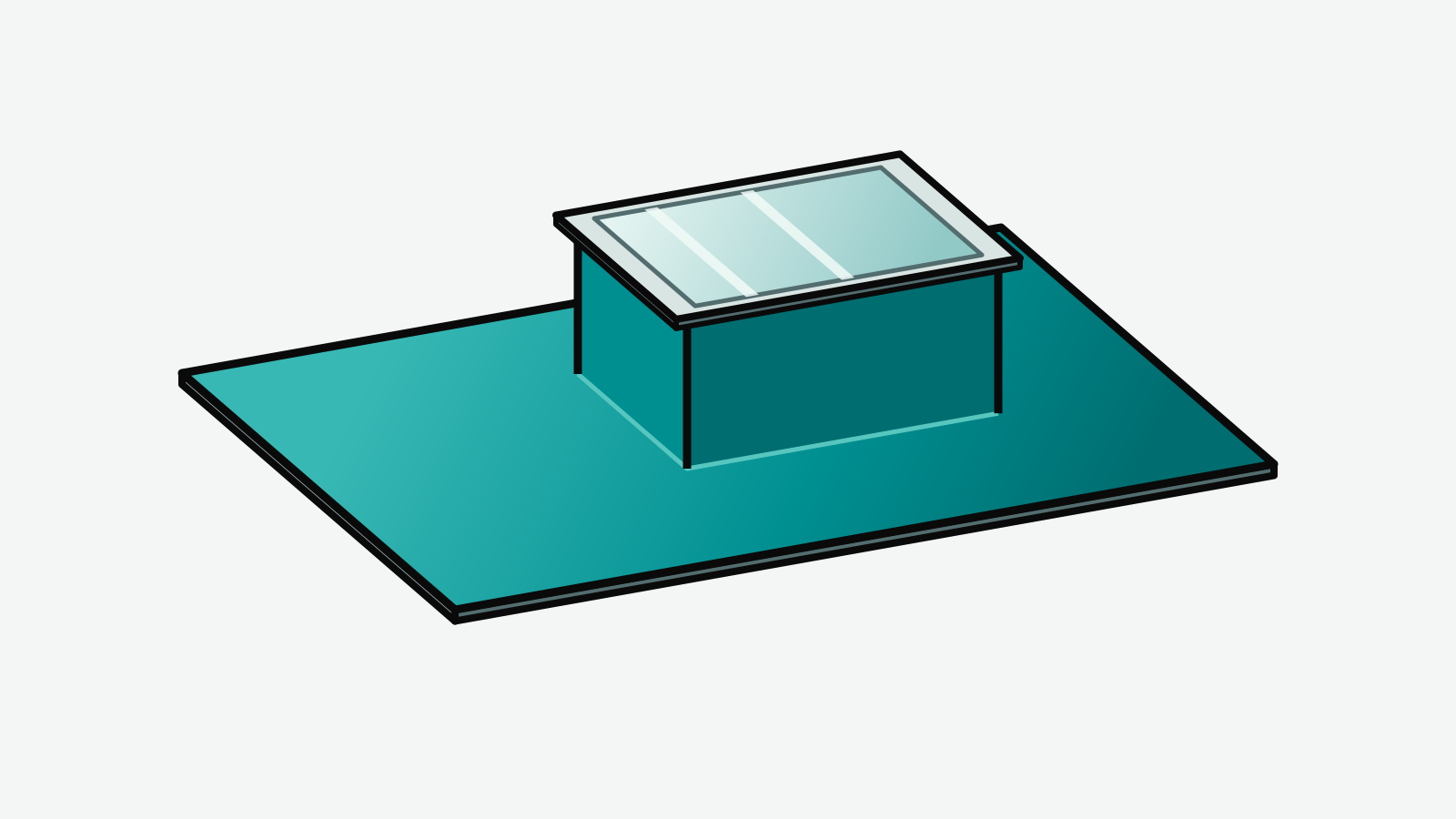
Technical illustration. Illustrative roof-upstand detail showing a continuous liquid-applied membrane. System choice and preparation remain roof-specific.
5.0/5 · 4 Google reviews
Roof detail reference
This detail image provides context for the service. Survey findings and the written specification determine what is suitable for your roof.
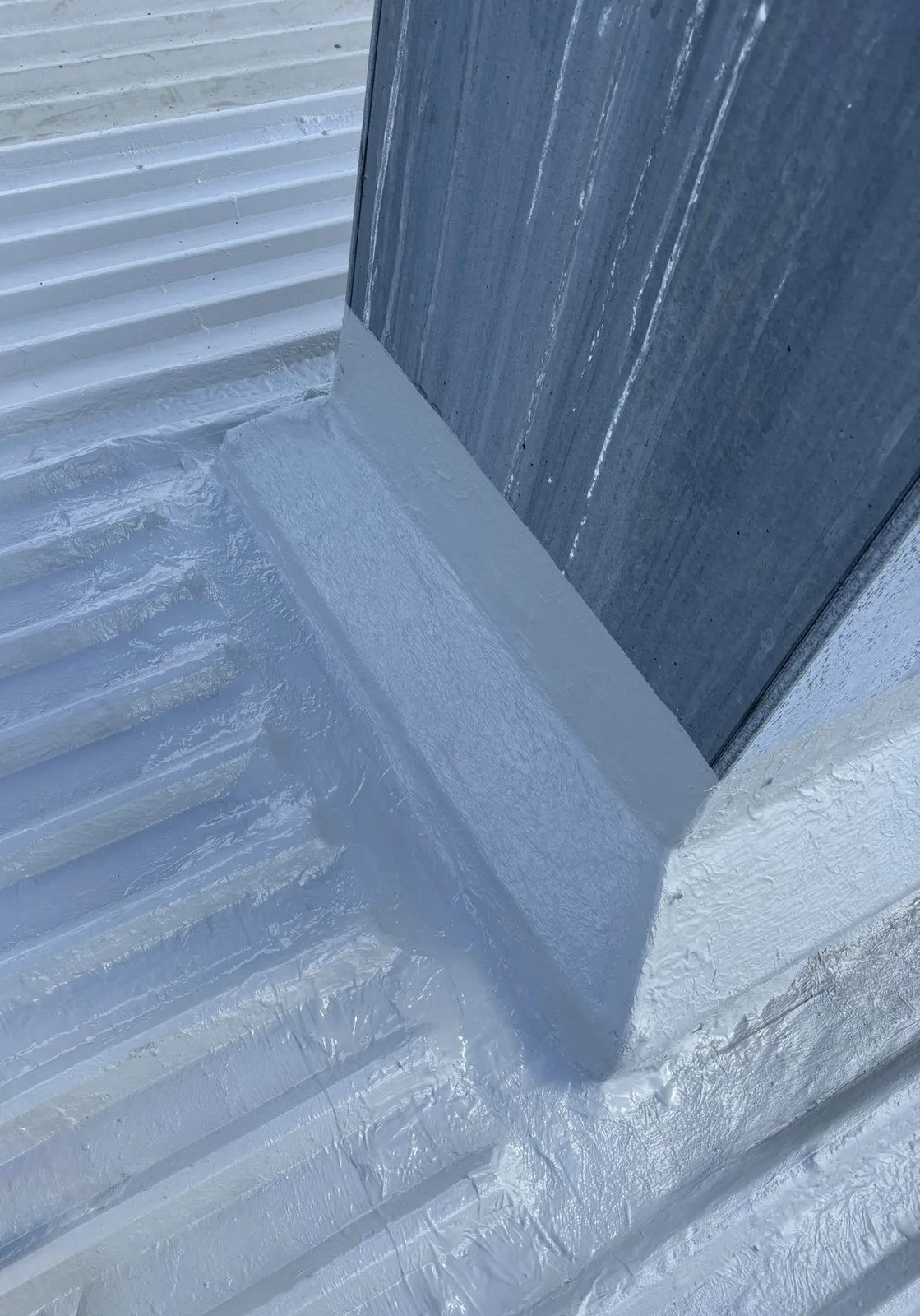
Liquid-applied membrane around a profiled roof upstand detail. System choice and preparation remain roof-specific.
From the site record
Related project records
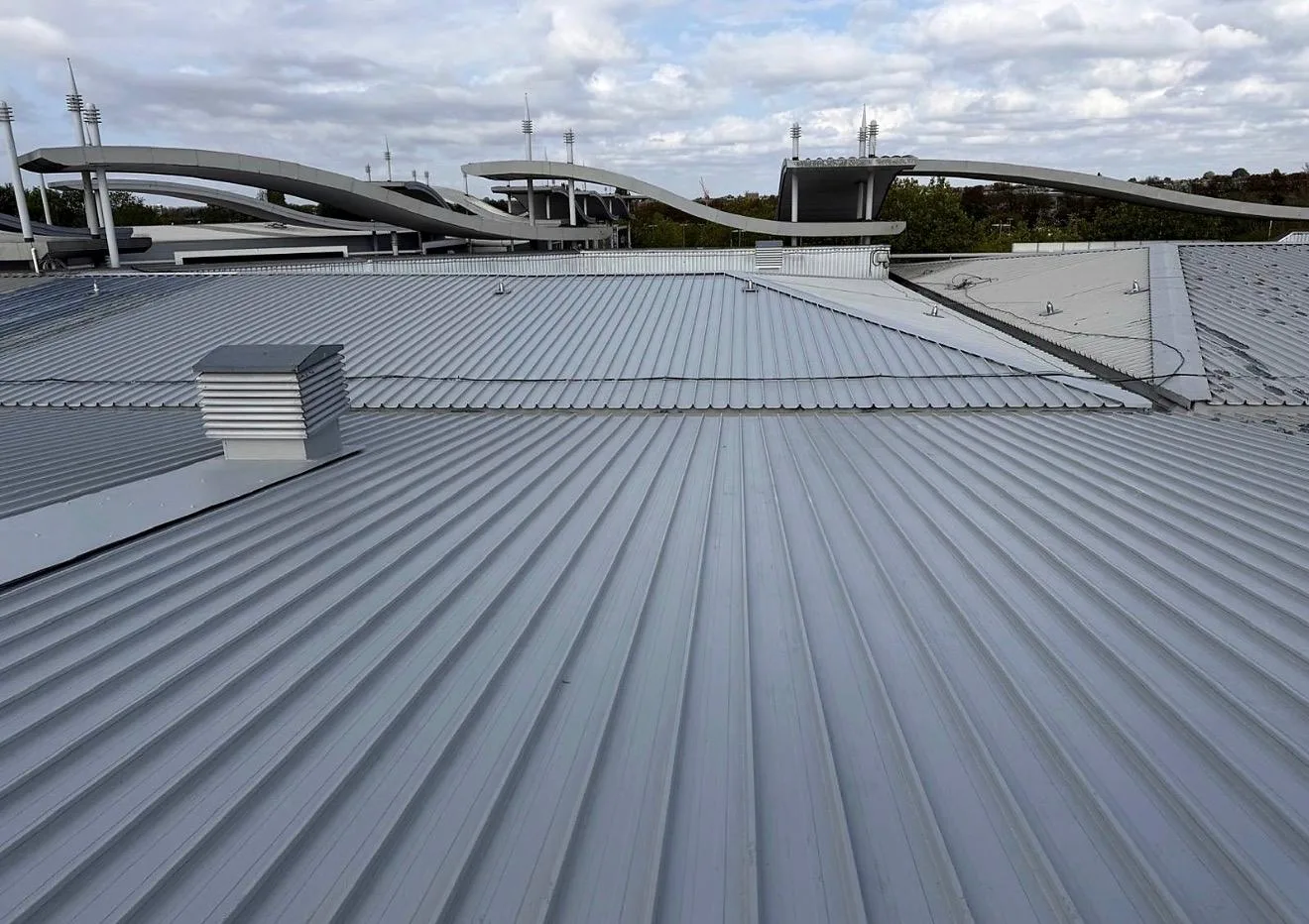
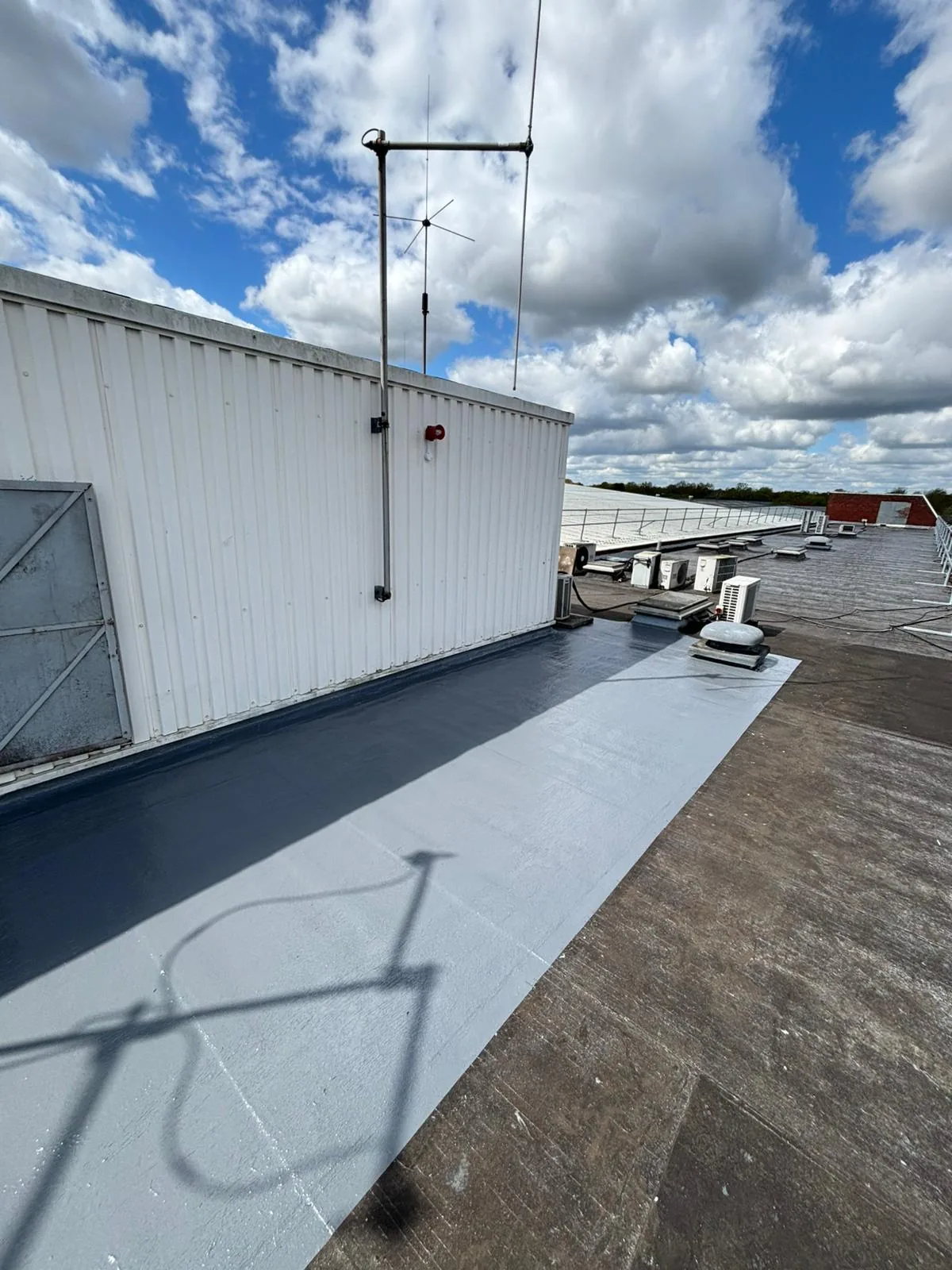
Photographed examples of this service, with the full project scope available in each case study.
Greenford, London
Retail Roof Liquid Waterproofing, Greenford
Liquid waterproofing across a 1,100m² retail roof and its gutters in Greenford, London. The four-week project involved a live store with restricted access and achieved a 20-year manufacturer's product guarantee.
Commercial liquid waterproofing is a roof-specific liquid membrane system applied to a prepared substrate, often with reinforcement at details or across the roof. It can be a suitable refurbishment option, but compatibility, moisture, drainage, weather conditions and the selected manufacturer's specification must be confirmed first.
Is Liquid Waterproofing Suitable for Your Substrate?
Possibly. Felt, asphalt, concrete, metal and some single-ply roofs may be candidates only where the existing construction is sound, dry, stable and compatible with the proposed system.
Overlay is unsuitable where the survey finds saturated materials, unstable layers, poor adhesion, deck defects, significant trapped moisture, inadequate falls or an incompatible substrate. Those findings may point to investigation, local removal, drainage work or a different roof design.
Weather, Curing and Programme
Weather and cure timing cannot be assumed from a generic figure. Temperature, humidity, substrate moisture, wind and the selected product affect application windows and rain resistance.
A responsible programme identifies the product instructions, forecast assumptions, sequencing, protection of exposed areas and what happens if conditions change. Works should proceed only when the substrate and weather meet the selected system's written requirements.
Liquid vs Felt, Single-Ply and EPDM
There is no universal winner. Liquid systems may suit complex detailing and compatible overlays; sheet systems may suit other roof geometries, substrates, traffic demands or design strategies.
Compare like-for-like, roof-specific proposals: condition findings, design responsibility, preparation, detailing, fire controls, drainage, maintenance, programme and end-of-life assumptions—not only the initial price.
Repair the affected area or refurbish the roof?
A local repair may be appropriate where inspection identifies a limited, accessible defect and the surrounding roof remains suitable for that repair. Wider deterioration, recurring defects or concerns about the existing build-up may call for further investigation or a planned refurbishment option instead.
The extent of visible leaks alone does not establish the condition of the whole roof. A free contractor roof condition survey can record observable defects and access limits, then inform whether a targeted repair, additional investigation or refurbishment proposal is the sensible next step. Any overlay remains subject to substrate condition, moisture, adhesion and system compatibility.
What the Survey, Specification and Procurement Pack Should Establish
The condition survey should record roof construction, moisture and adhesion evidence where needed, defects, falls and drainage, access, interfaces and operational constraints. The specification should name the system and set out preparation, coverage, reinforcement, details, quality checks and maintenance.
Before appointment, request product data and relevant certification, installer competence evidence, method statement and RAMS, programme assumptions, inspection records, and guarantee wording. Confirm the guarantee issuer, scope, exclusions, maintenance conditions and whether it is available for the specific project.
What the specification covers
01
Seamless Application
A correctly specified liquid membrane can form a continuous waterproof layer around many roof details.
02
Cold Applied
Many liquid systems are cold-applied, avoiding flame application; all work still requires site-specific safety controls.
03
Product-Specific Curing
Cure and rain-resistance times vary by product, temperature, humidity and substrate condition; the manufacturer's instructions govern.
04
Reinforced Systems
Reinforcement may be specified at details or across the field area where the selected system requires it.
05
UV Stable Finishes
A compatible finish can be specified for the expected exposure and maintenance regime.
06
Overlay Existing Roofs
Overlay may be possible on compatible, dry and sound substrates following a condition survey and adhesion assessment.
The Advantages
Why Choose This Solution?
Our liquid waterproofing service delivers lasting results with minimal disruption to your business operations.
Options for complex roof detailing
Potential to retain a suitable existing build-up
No flame application for cold-applied systems
System-specific preparation and detailing
Project-specific access and programme planning
Product certification evidence where applicable
Guarantee terms available for review before appointment
Condition-led refurbishment options
Our Process
From initial survey to final inspection, we follow a proven methodology to ensure quality results every time.
1
Site Survey
Our technical team records construction, condition, drainage, access constraints and visible defects to define the next investigation or scope.
2
Specification
We set out suitable options, assumptions, preparation, detailing and evidence required for the proposed system.
3
Preparation
Preparation follows the survey findings and selected product requirements; it can include cleaning, repairs, drying and primer trials.
4
Application
The selected liquid system is applied to its written specification, including reinforcement and detailing where required.
Common Questions
How long does liquid waterproofing last?
Service life is system- and project-specific. Ask for the proposed product's technical data, maintenance requirements and the written guarantee terms, including issuer, duration, exclusions and conditions.
How much does commercial liquid waterproofing cost?
There is no dependable generic installed price. Area, substrate repairs, access, drainage, detailing, system and programme all affect cost. A condition survey and itemised scope are needed for a comparable quotation.
Does the existing roof need to be stripped before liquid waterproofing is applied?
Not always. Overlay is considered only where the existing build-up is compatible, dry, stable and adequately bonded. Saturated insulation, failed adhesion, deck defects, trapped moisture or unsuitable falls can make removal or another solution necessary.
How long does liquid waterproofing take to install on a commercial roof?
Programme duration depends on scope, access, preparation, detailing, weather and product cure conditions. A project programme should state its assumptions and temporary-weathering arrangements.
Can you apply liquid roofing in wet weather?
Application conditions are product-specific. The substrate normally needs to meet the selected manufacturer's requirements for dryness, temperature and weather; rain-resistance and cure times vary with conditions.
Is liquid roofing suitable for flat roofs?
It can be suitable for many flat and low-pitched roofs, particularly where detailing is complex. The survey must also assess falls, drainage, moisture, traffic and compatibility before a system is selected.
What preparation is needed before liquid waterproofing is applied?
Preparation follows the condition survey and product specification. It may include cleaning, repairs, drying, adhesion tests, primer and local detail work; the quotation should identify what is included and excluded.
Where We Work
Liquid Waterproofing Across the UK
We deliver liquid waterproofing from our Hellaby, Rotherham headquarters to commercial buildings across England, Scotland and Wales. Explore some of our most active service areas:
Request a free contractor roof condition survey to discuss the visible issues, access and whether a repair or refurbishment proposal is appropriate. Recommendations depend on what can be assessed safely at your building.
These primary sources support the safety and regulatory context. Product-specific application, certification and guarantee information must be checked against the proposed system's current documentation.